
The list of the bird species and numbers we observed during this monitoring period runs through the text.
It’s a bluebird day, 19 degrees, near Vlorë.
We have come here to observe birds along a transect (a pre-determined route designated for data gathering and monitoring) running parallel to the controversial Vlorë airport runway.
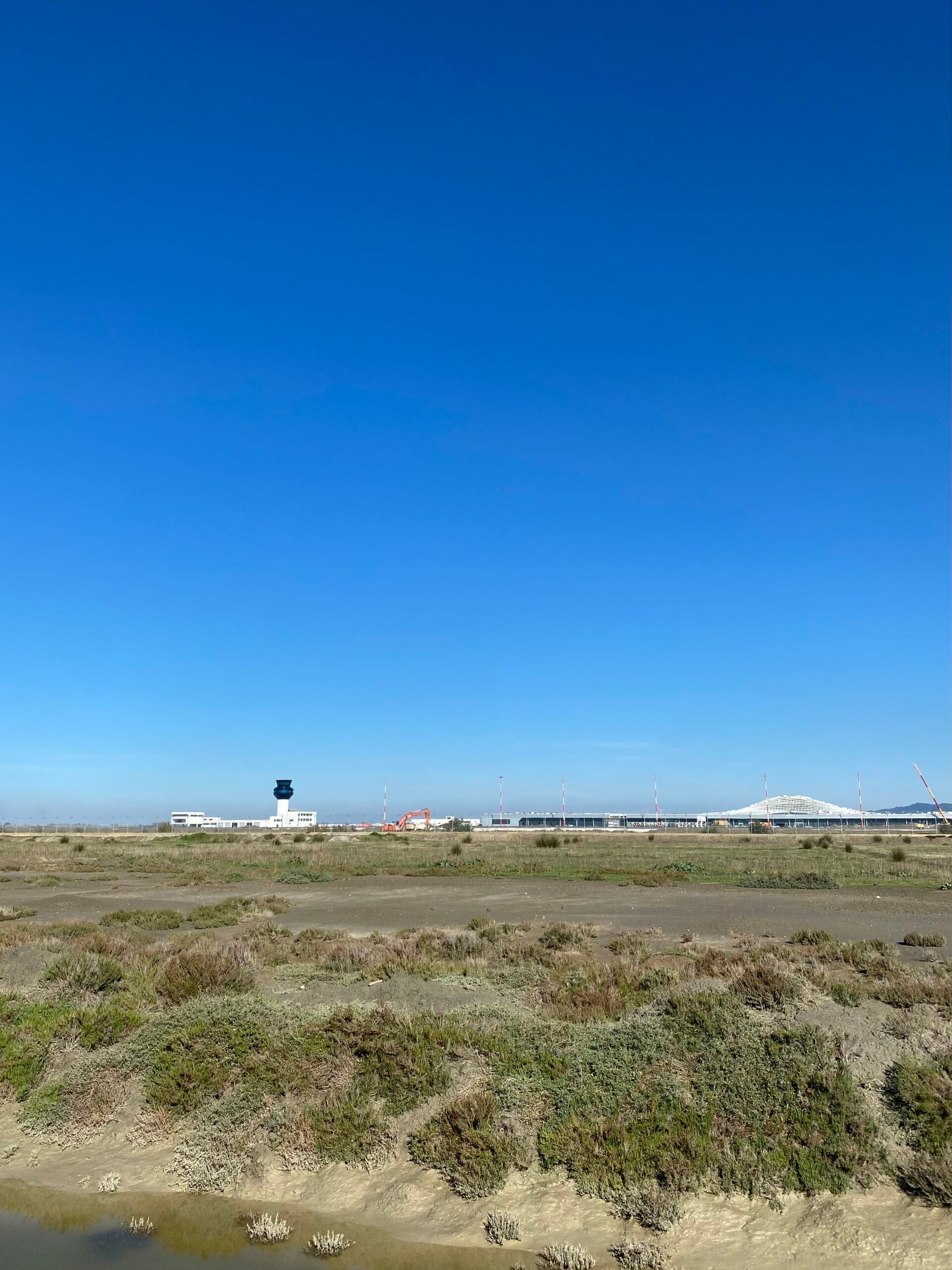
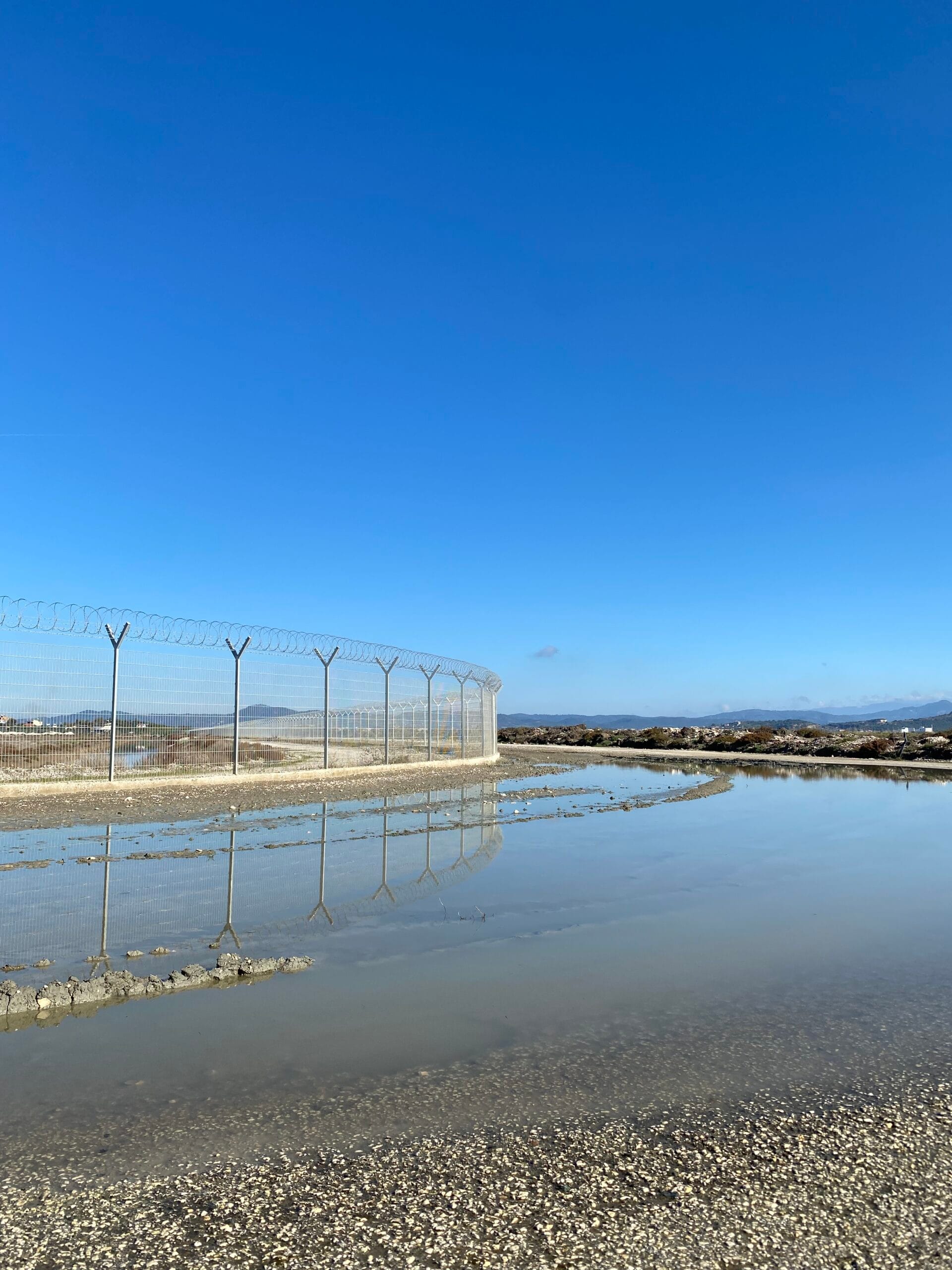
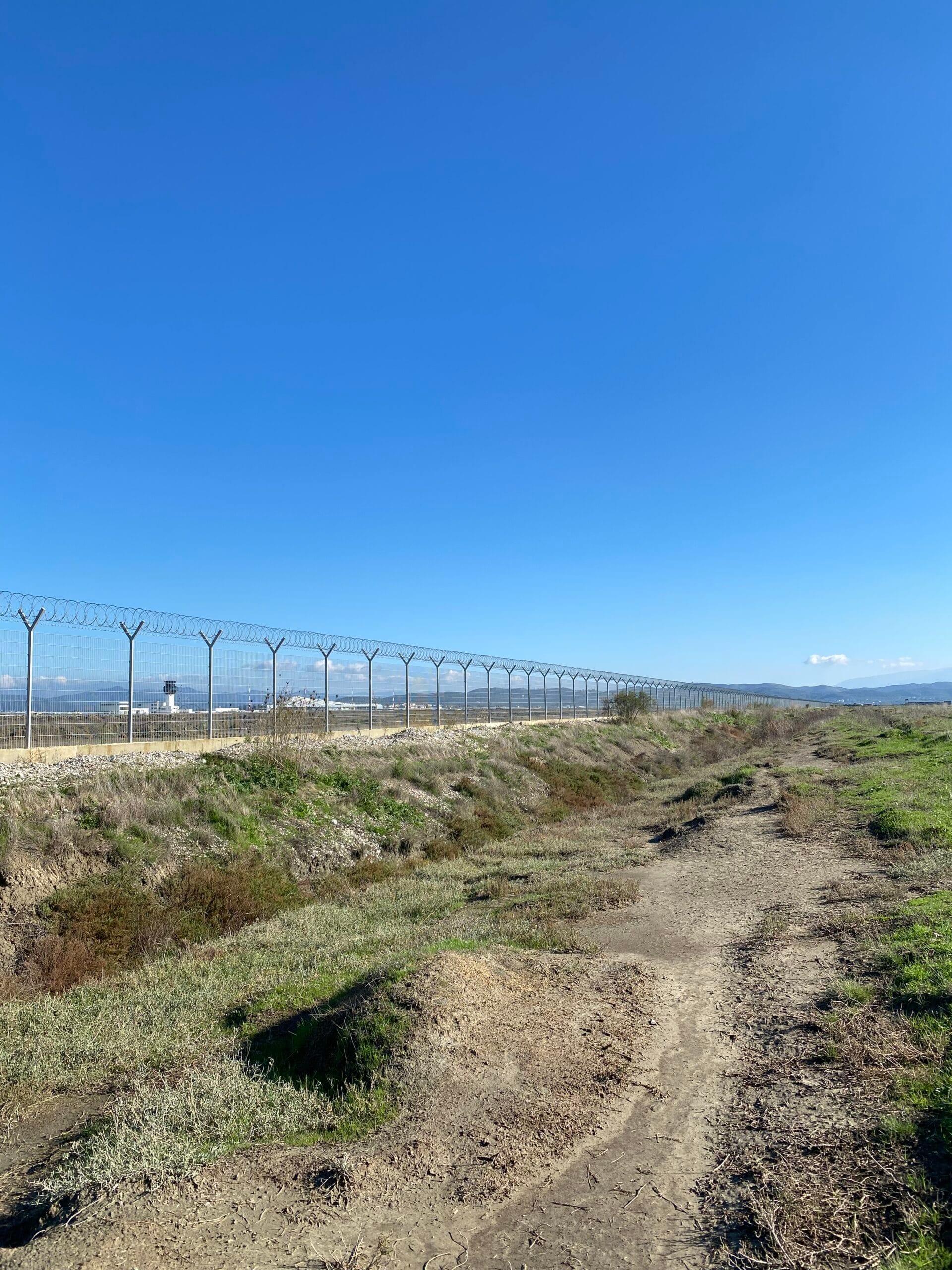
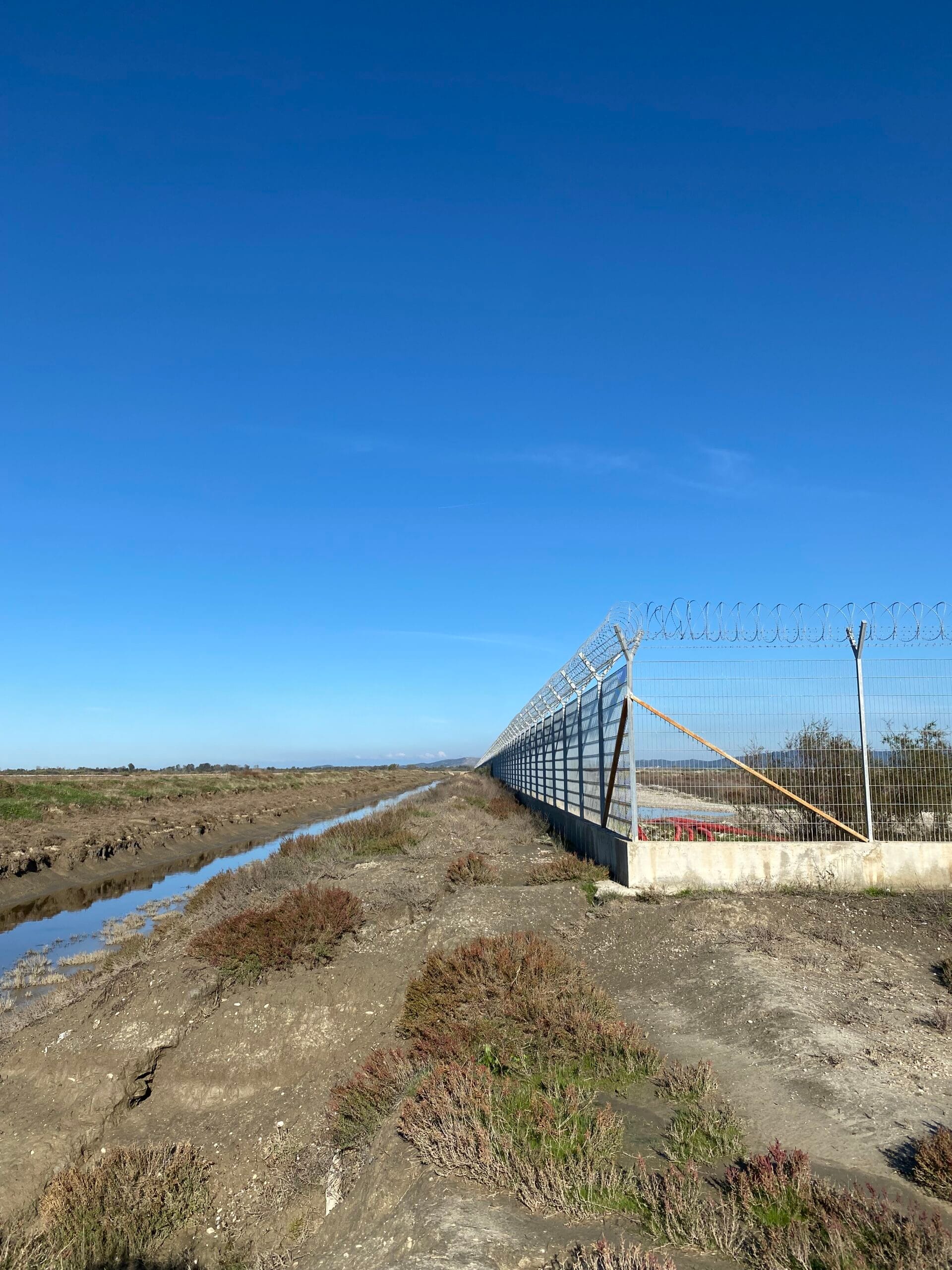
As we draw closer to the site of the airport, glimpses of white punctuate the horizon. A pale barbed wire-topped fence set in concrete stretches into the distance, reflected in potholes pooled with water, and piles of gravel appear mountainous against the sky. The airport terminal appears: a brilliant white cylindrical tower topped with a control room. Dark and glossy as the pupil of an eye, it rises from the sweeping framework of the terminal building which emerges like a bleached ribcage out of the mudflats. The colour contrasts starkly with the gentle tones of the wetlands, the salt flats and the blue mountains framing the horizon. It feels like this reflective white doesn’t belong here in such vast quantities: it should only be seen in flashes of skylark tailfeathers, or the shimmering reflection of distant flamingoes in the salt pans.
Black redstart: 5
Monitoring activities are used to gather data about the birds living or passing through here as they migrate along the Adriatic Flyway, and the AOS team has been consistently working in this area for many years. They have seen the effects and changes wrought by the airport developments, and have been fighting legal battles to try and protect this fragile ecosystem and mitigate the harm already caused.
Eurasian Magpie: 5
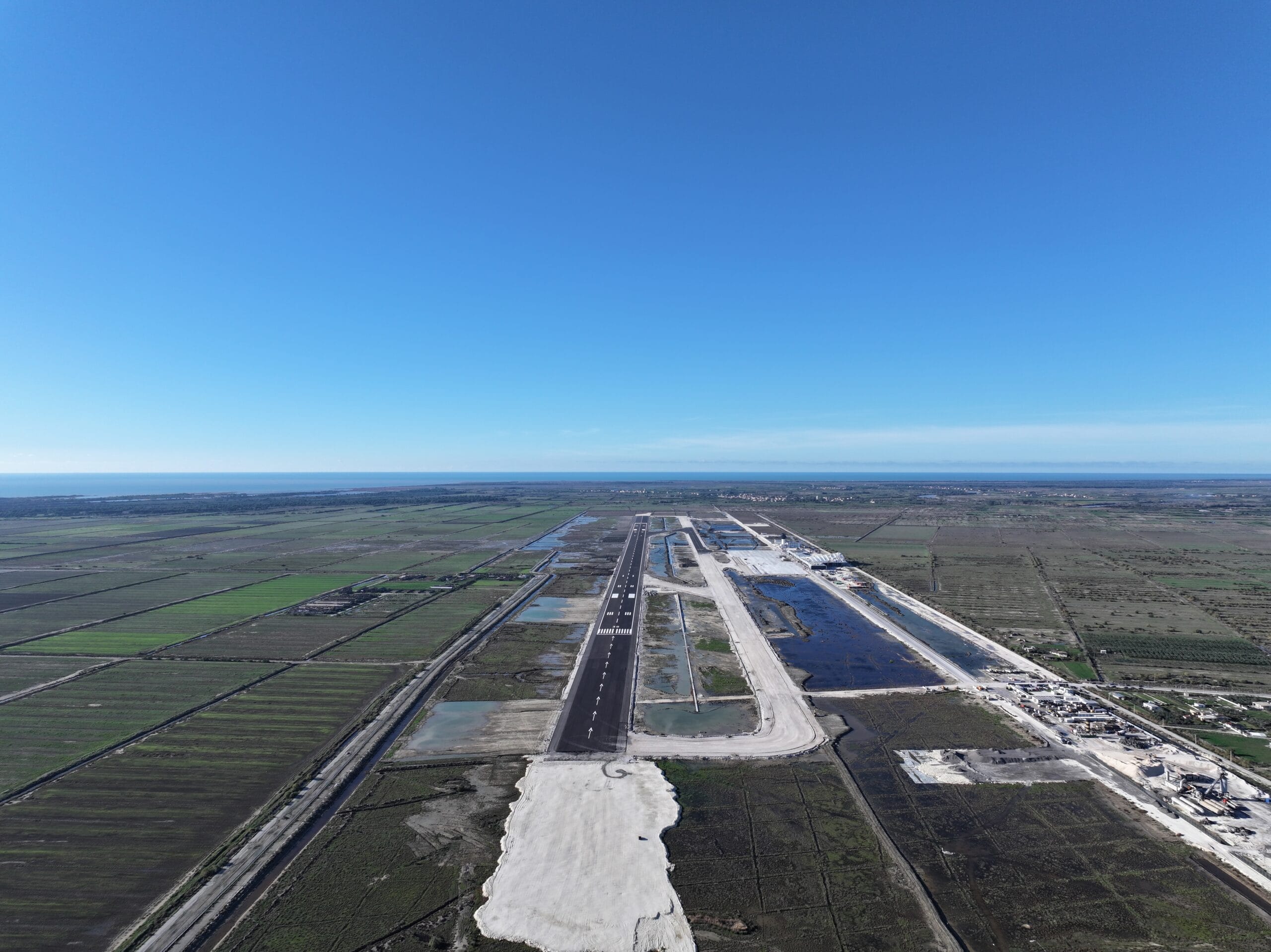
The land bordering Narta lagoon is agricultural, a tessellation of rectangular fields bisected by fences and ditches. The airport cuts through diagonally, an incision right in the centre. The isolated footprint of the airport was removed from the Vjosa River Delta Protected Area, bureaucratic wrangling underscoring the vulnerability of these protections.
Common Kestrel: 1
Meadow Pipit: 5
Viewing images of the area changing over time via sterile satellite imagery, the pale streak of the runway appears and expands like a neat surgical scar. It is hard to comprehend the chaotic impact of the airport construction work through a screen, and it’s not until you experience it in person that you begin to process the magnitude of the destruction wrought.
The sound hits us first: screeching diggers and earth movers where birds would have congregated. Then the smell of fuel, asphalt and gravel under the beating sun. You can taste the dust in the air. Workers in fluorescent jackets (yellow like serin feathers) cluster around the site.
European Serin: 46
Common Linnet: 6
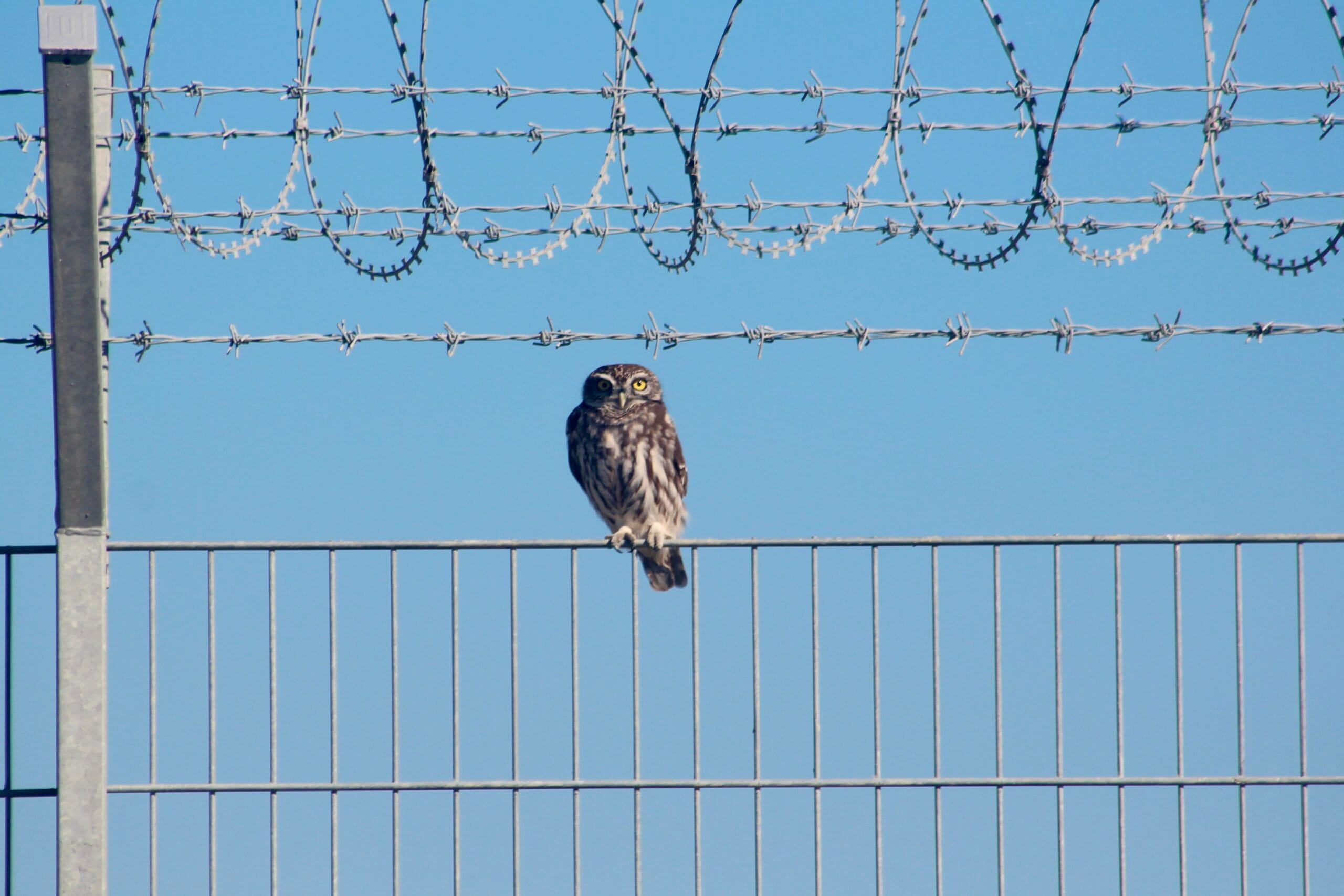
We drive a little further along the fence, spotting a Little owl perching in the middle. We stop the car, rolling down the windows to take photographs of the bird with its soft feathers framed by coiled barbed wire. Look to the left and spot another Little owl (perhaps its mate) perched inside the apex of a barn roof.
Little Owl: 2
Saline-loving glasswort growing along the ditches indicate that the sea is close by, although we can’t see it at the horizon. Underfoot is the kind of mud that clogs your boots, adding sticky weight as you try not to skid with each step. Overhead flock starlings and, far higher, fly aeroplanes.
Common Starling: 161
A shepherd moves slowly with his flock of sheep and his dogs under the sun. The gentle sound of bells around the sheep’s necks floats across the mudflats, mingling with sounds of birdsong and construction. Starlings follow the sheep, picking at parasites and insects disturbed by their movement.
Common buzzard: 1
Eurasian Chaffinch: 47
Our initial progress is slow, halted at each step by the excitement of spotting and counting birds: starlings chattering in the olive trees behind a wall; a distant marsh harrier gliding; skylarks erupting from scrubland close by.
Eurasian Skylark: 92
Western Marsh Harrier: 1
As we walk, my senses tune in with my surroundings. To the right, the fence where various passerines hop through the barbed wire and the bushes below where they chatter. Ahead, in the distance, herons pass by intermittently. Nearby to our left, in the grazing lands, crested larks rise and circle. Mushrooms and glasswort brush our ankles. Each habitat represents a whole universe at different scales: look closely at the algae-slicked puddles and you notice millions of bubbles forming; look high towards the distant mountains and you see hooded crows mobbing a hen harrier.
Crested Larks: 6
Hen Harrier: 1
Hooded Crow: 107
Grey Heron: 3
We startle a sun-basking water snake which launches itself into a ditch.
Common chiffchaff: 3
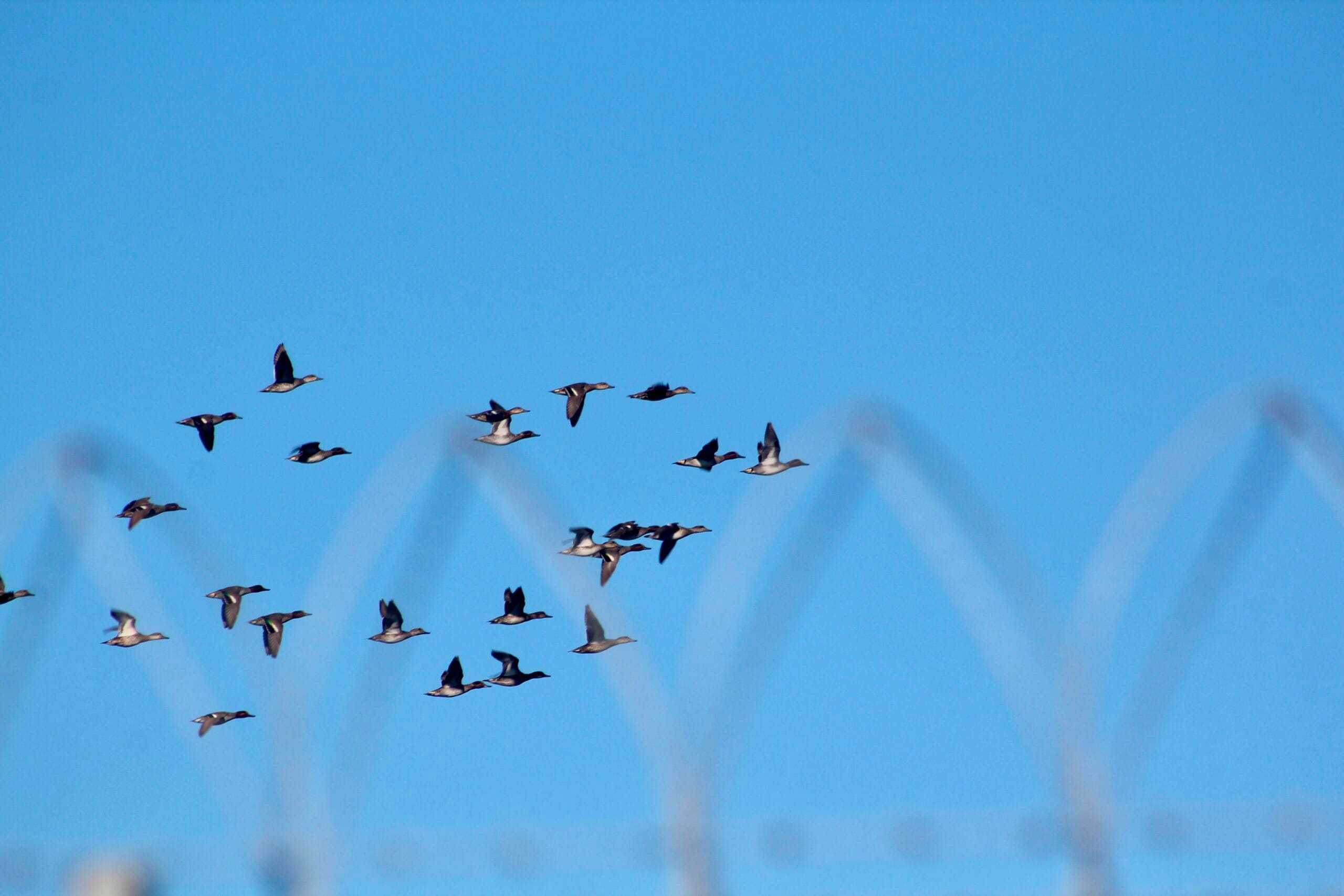
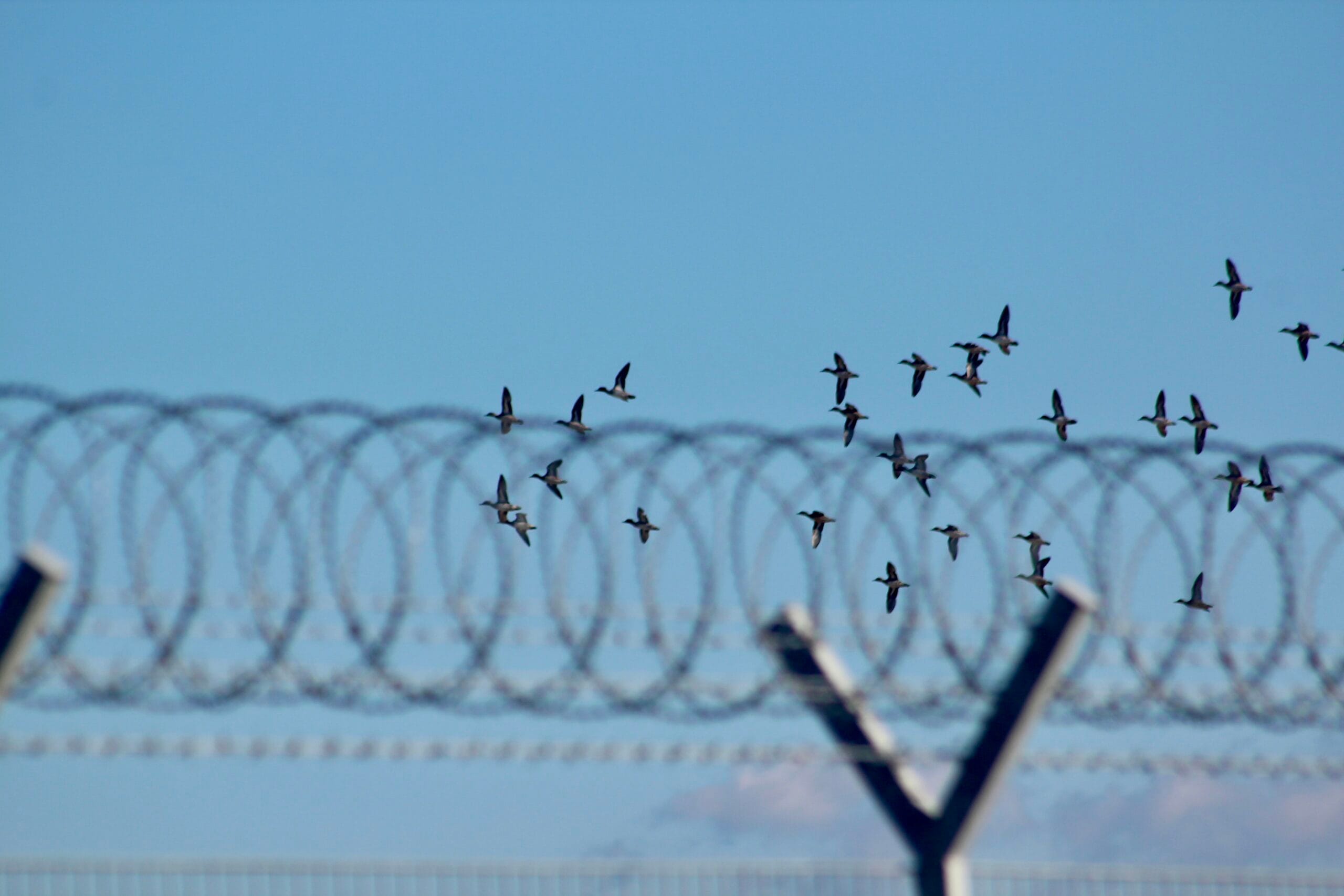
We hear and then see a flock of teal circling, brilliant flashes of iridescent blue wing feathers spotted through the binoculars. They are about to land on waterways that we can’t see over the concrete foundations, behind the airport fence.
Eurasian Teal: 72
Topped with rigid, bladed wire, the fence encloses more than just the flat runway. The vertical, invisible border of the airspace above the fence marks a future of violence, the area categorised as a risk zone for planes taking off and landing,
Bird strikes are a significant risk factor to the running of airports. This location is a particularly rich and valuable ecosystem, dense with bird species ranging from small passerines to much larger flamingoes and pelicans. Birds such as this beautiful flock of teal will face a future of either being shot, attacked with pyrotechnics (sound explosions or flashes), hunted with tame birds of prey, or another method of brutal control decided through risk analysis. Thousands of birds use this aerial highway twice a year, adding to the resident population for months at a time, so the destruction of bird life would be an ongoing cycle if the airport begins to function as intended.
Corn Bunting: 4
Eurasian Sparrowhawk: 1
European Goldfinch: 2
As we return to the beginning of the transect, the impact of this senseless environmental carnage weighs heavily. A further looming environmental juggernaut lies offshore in the form of the Trump/Kushner investments in Sazan island. Amongst the inevitable pollution and loss of habitat this would cause, what future awaits for the flashy black redstarts, the european stonechats, buttery-yellow serins and the busy white wagtails? Each step along the transect feels like one further into the entanglement of the ground and the air; the present and the future; bureaucracy and birdlife.
European Stonechat: 10
White Wagtail: 11
As we drive away, a water pipit busies itself in a puddle.
Water Pipit: 1
Written by Georgia Ferguson